

Introduction
If you’re new to singles pickleball or want to sharpen your competitive game, understanding the pickleball rules singles is the first step toward playing confidently. While singles and doubles use the same court and many of the same regulations, important differences exist in serving order, scoring, player positioning, and match strategy. Learning these rules not only helps you avoid costly faults but also improves your overall performance during competitive and recreational matches.
According to the latest USA pickleball rules singles rulebook for 2026, singles matches continue to follow traditional scoring, with points earned only by the serving player unless rally scoring is specifically adopted by an event. Whether you’re preparing for your first tournament or simply playing at your local court, this guide explains the official rules, scoring system, serving sequence, and common mistakes every player should know.
Official Singles Pickleball Rules Explained
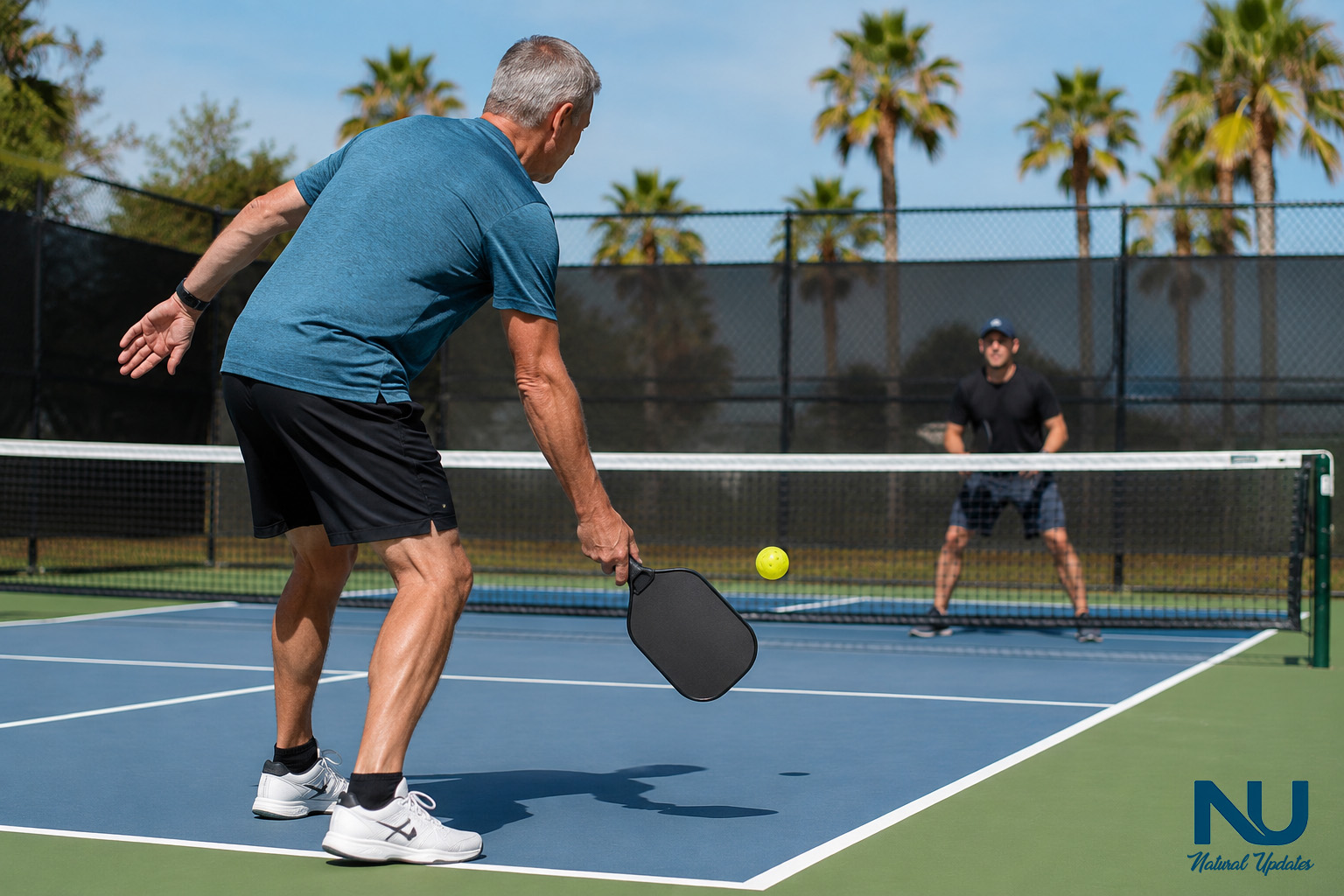
Understanding singles pickleball starts with knowing the official game format. Singles uses the same pickleball court dimensions as doubles, but only one player occupies each side of the net. This creates a faster-paced game that emphasizes movement, consistency, and shot placement.
A standard pickleball court measures 20 feet wide by 44 feet long. The non-volley zone, commonly called the kitchen, extends seven feet from the net on each side. Players must also respect the baseline, sideline, centerline, and service courts throughout each rally.
The serve must travel diagonally into the opponent’s service area. Before volleying, both players must allow the ball to bounce once on each side of the court. This requirement is known as the double bounce rule and is one of the most important fundamentals in pickleball.
Players should also understand common faults that immediately end a rally or service opportunity. These include serving into the net, hitting the ball out of bounds, pickleball rules singles into the kitchen while volleying, committing a foot fault, or failing to return the ball before it bounces twice.
Unlike doubles, there is no partner to cover open space. Successful singles players rely on efficient footwork, accurate serves, deep returns, and smart court positioning to control rallies.
Singles Serving Rules and Scoring System
One of the biggest differences between singles and doubles is the serving sequence. In singles, each player receives only one serve before a side out occurs, except at the very beginning of the game when the first server starts with a single service turn.
The server always begins behind the baseline and must strike the ball using a legal serve. The serve must land diagonally inside the opponent’s service court. If the serve lands outside the proper service area or touches the kitchen on the serve, it is considered a service fault.
The serving position depends on the server’s score.
When the server’s score is even, the serve is delivered from the right-hand service court.
When the score is odd, the serve is delivered from the left-hand service court.
This simple rule helps players remember where they should stand throughout the match.
Scoring in singles follows the traditional system used in most recreational and tournament play. Only the serving player can earn points. If the receiving player wins the rally, no point is awarded. Instead, the serve changes hands in a side out.
Games are usually played to 11 points, and a player must win by at least two points. Some tournaments use games to 15 or 21, but the “win by two” requirement remains the same unless event-specific regulations state otherwise.
Keeping score correctly is essential. Before every serve, players announce two numbers: the server’s score followed by the receiver’s score. Unlike doubles, there is no third number because there is only one server on each side.
Correct score calling helps prevent confusion and keeps matches running smoothly, especially during competitive play.
Pickleball Singles Gameplay and Court Positioning
Singles pickleball rules singles demands excellent movement because one player must defend the entire court. After serving, players should quickly recover toward the center of the baseline while remaining ready for the opponent’s return.
Strong court positioning pickleball rules singles reduces unnecessary running and helps players respond to passing shots, lobs, dinks, groundstrokes, and overhead smashes more effectively.
The return of serve is another critical part of singles gameplay. Since the serving team cannot volley the return immediately due to the double bounce rule, returning players often gain an early opportunity to move closer to the kitchen line after hitting a deep return.
Advanced players frequently use the third shot to regain control of the rally. Depending on the situation, this may be a controlled drop shot, a powerful drive, or a well-placed passing shot.
Although many beginners associate pickleball with soft dinks near the kitchen, singles often involves deeper groundstrokes and faster movement because there is significantly more open court to cover.
Players who combine smart shot selection with proper positioning usually perform better than those relying only on power.

Hi, I’m Nimra, a content creator passionate about making word meanings, slang, abbreviations, and names easy to understand. I strive to provide clear, accurate, and helpful information for every reader. Let’s achieve more together!
1 thought on “Pickleball Rules Singles 2026: Official Guide”